
Screened-In Patios in Knoxville, TN
Transform your existing patio into a bug-free outdoor living room. Custom patio screen enclosures built for East Tennessee homeowners — more usable space, zero mosquitoes.
What Is a Screened-In Patio?
A screened-in patio takes your existing concrete, paver, or stone patio and encloses it with a roof structure and screen mesh walls — turning an open, underused slab into a protected outdoor living room. Unlike a screened porch (which is typically elevated and attached at the porch level of the house), a screened patio starts at ground level on your existing patio surface.
This is one of the most practical home improvements we build for East Tennessee homeowners. Most homes in the Knoxville area already have a back patio — a concrete pad that gets used for a grill and maybe a couple of chairs but sits empty most of the time because of bugs, sun exposure, or rain. A patio screen enclosure solves all three problems. You get insect protection, shade from a solid roof, and a dry place to sit during afternoon thunderstorms.
ATC Sunrooms has been converting patios into screened-in living spaces across Knoxville and East Tennessee for over 25 years. We build the roof structure, install powder-coated aluminum framing, and fit precision screen panels — all engineered for your specific patio dimensions and your home’s architecture. Every project starts with a free in-home consultation where we measure your patio, discuss your goals, and provide a written estimate.
Benefits of Screening In Your Patio
- Use your patio again — Most open patios in Knoxville are underused because of insects, heat, and rain. Screening it in changes that overnight
- Complete insect protection — Mosquitoes, gnats, wasps, and flies stay outside where they belong
- Rain and shade protection — A solid roof keeps you dry and shaded during Knoxville’s frequent summer storms
- Cost-effective conversion — Your foundation (the patio slab) already exists, which significantly reduces construction cost
- Increased home value — A screened patio adds functional living space and appeals to buyers
- Pet containment — Give dogs and cats safe, enclosed outdoor access with fresh air
- Low maintenance — Aluminum framing never rots or needs painting. Screens need only occasional rinsing
- Upgrade path — Convert to a three-season sunroom later by swapping screens for glass panels
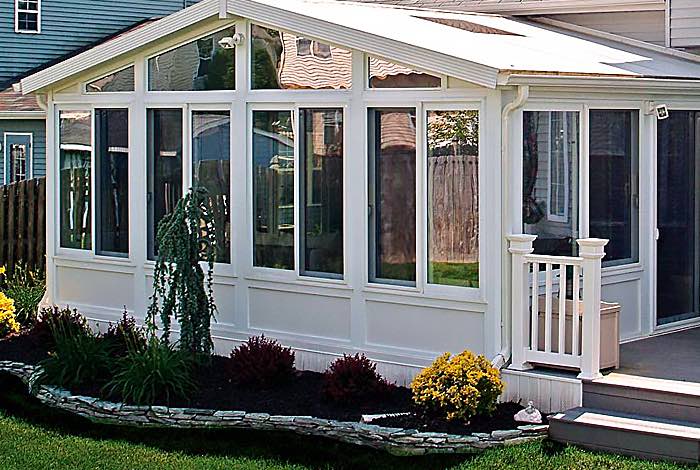
The Patio Conversion Process
Converting an open patio into a screened-in living space is one of the most straightforward projects we do. Here’s how it works:
1. Site Evaluation
We visit your home to assess your existing patio — its size, condition, drainage, and how it connects to the house. We also evaluate the attachment point on your home’s exterior wall, check for utilities (downspouts, HVAC units, electrical), and discuss your layout preferences.
2. Design & Engineering
We design the roof structure and screen framing to match your home’s architecture — roofline pitch, color palette, and style. Engineering drawings ensure the structure meets local building codes for wind load, snow load, and attachment to the existing home.
3. Build & Install
We install the roof structure first, tying it into your home’s existing roof or wall. Then we set the aluminum framing and fit the screen panels. Electrical work (fans, lights, outlets) runs concurrently. Most patio conversions are completed in 1-3 weeks.
Screened Patio Features & Options
Screen Mesh Options
Standard fiberglass mesh handles everyday insect protection and is the most popular choice. No-see-um mesh uses a tighter weave to block tiny gnats and midges — ideal for homes near Fort Loudoun Lake, the Tennessee River, or wooded areas. Pet-resistant screen is available for households with dogs or cats that might claw at the panels.
Roof Systems
Every screened patio gets a solid, insulated roof. We offer studio (single-slope), gable (peaked), and flat roof configurations. Roof panels include foam insulation for temperature management and are engineered to tie cleanly into your existing roofline. Proper flashing and drainage are built into every installation.
Aluminum Framing
Powder-coated aluminum framing is our standard — it never rots, warps, peels, or needs repainting. Available in white, bronze, sandstone, and custom colors. The framing is engineered to hold screen panels securely while allowing individual panel replacement if damage ever occurs.
Electrical Integration
We install ceiling fans, recessed lighting, pendant fixtures, and GFCI-rated electrical outlets as part of most patio enclosure projects. A ceiling fan is practically mandatory in East Tennessee — it moves air on still summer evenings and dramatically improves comfort. Outlet placement is planned during design so you have power where you need it.
Screened-In Patio Cost in Knoxville
Screened-in patio enclosures in the Knoxville area typically range from $5,000 to $15,000. Because your existing patio slab serves as the foundation, you skip the most expensive part of new construction — the foundation work. This makes patio screen enclosures one of the best values in outdoor home improvement.
About These Prices
The costs shown on this page are industry averages based on national and regional market research. They do not represent specific pricing from ATC Sunrooms and are provided for general budgeting purposes only. Actual project costs vary based on size, materials, site conditions, and design choices.
ATC Sunrooms consistently offers more competitive pricing than national franchise brands and many local competitors. As an independent, owner-operated company with low overhead, no franchise fees, and no expensive showrooms to maintain, we pass those savings directly to you. Our pricing reflects the true cost of quality materials and skilled labor — not corporate markups. Request your free estimate to see the difference.
Where your project falls within that range depends on:
- Patio size — Larger patios require more framing, roofing, and screen material. Most projects cover 100-400 square feet
- Slab condition — If your existing patio is cracked, uneven, or poorly drained, prep work adds to the cost
- Roof style — Studio roofs (single-slope) are the most economical. Gable roofs cost more but match most home architectures better
- Screen material — Standard fiberglass is the most affordable. No-see-um and pet-resistant screens cost more per panel
- Electrical work — Ceiling fans, recessed lighting, and outlets add cost but make the space significantly more functional
- Door configuration — Single screen door, sliding screen door, or double French-style screen doors
The most cost-effective screened patio projects are simple conversions of patios that are in good condition, located directly against the house, and accessible for roof tie-in. Schedule a free consultation to get an accurate estimate for your patio. For broader pricing context, visit our cost guide.
Screened Patio vs. Screened Porch: What’s the Difference?
People often use these terms interchangeably, but there are practical differences that affect your project scope and cost:
| Feature | Screened-In Patio | Screened Porch |
|---|---|---|
| Starting point | Existing ground-level patio slab | Elevated porch or new porch framing |
| Foundation | Uses existing concrete/paver patio | Requires porch foundation or deck |
| Elevation | Ground level — step out directly | Typically raised — requires steps |
| Aesthetic | Modern, clean, integrated | Traditional Southern porch look |
| Best for | Homes with existing back patios | Homes with existing porches, or front-of-house additions |
| Typical cost | $5,000 – $15,000 | $5,000 – $15,000 |
| Construction time | 1-3 weeks | 2-4 weeks |
The core benefit is identical — insect-free outdoor living with a solid roof and fresh air ventilation. The right choice depends on your home’s existing layout. If you have a ground-level patio, screening it in is typically faster and more affordable. If you have an elevated porch or want a traditional porch aesthetic, a screened porch is the way to go. Not sure which fits your situation? Schedule a consultation and we’ll walk through your options on-site.
Popular Uses for Screened-In Patios
Once the screens go up, homeowners are often surprised by how much their patio usage changes. Here’s what our Knoxville-area clients do with their screened patios:
Outdoor Living Room
The most common transformation. Comfortable furniture, a ceiling fan, and a rug turn a screened patio into a true outdoor living room. Homeowners add TVs, bookshelves, and side tables. It becomes the default spot for relaxing after work and on weekends.
Grilling & Outdoor Kitchen
A screened patio keeps flies and bugs away from food while you cook. Many clients position their grill just outside the screen door with dining space inside the enclosure. Others add a built-in bar area or serving counter for entertaining.
Play Area & Pet Space
Families with young children use screened patios as safe, enclosed play areas where kids can enjoy fresh air without wandering off. Pet owners love having a space where dogs and cats can be outside without escaping the yard or encountering wildlife.
Frequently Asked Questions About Screened-In Patios
Can any patio be screened in?
Most concrete and paver patios can be screened in, but a few conditions affect feasibility. The patio slab needs to be in reasonable condition — minor cracks are fine, but a slab with severe heaving or drainage problems may need repair first. The patio also needs to be adjacent to the house with a suitable wall surface for roof attachment. During your free consultation, we evaluate all of this and let you know exactly what’s needed.
Do I need a permit to screen in my patio?
Yes, in most cases. Knox County and the City of Knoxville require building permits for patio enclosures because the project involves a new roof structure attached to your home. ATC Sunrooms handles the entire permitting process — we prepare plans, submit the application, and manage all inspections. You don’t need to visit the permits office.
How long does it take to screen in a patio?
Most patio screen enclosures take 1-3 weeks to complete. Simple, straightforward conversions on well-maintained slabs can be done in as little as 5 business days. Larger patios, complex roof configurations, or projects that require slab repair or significant electrical work take longer. We provide a clear timeline during your consultation.
Can I upgrade a screened patio to a sunroom later?
Absolutely — and this is one of the smartest things about starting with a screened-in patio. Many of our patio enclosures are designed with future conversion in mind. When you’re ready, we can replace the screen panels with glass windows to create a three-season sunroom or even a fully insulated all-season sunroom. The roof structure and aluminum framing remain in place, so you’re not starting over. Mention this during your consultation if future upgrading is something you’re considering.
Will screening in my patio affect drainage?
No — and proper drainage is something we plan for in every project. The screen walls don’t block water flow at the ground level, and the new roof includes gutters and downspouts to direct rainwater away from the foundation. If your existing patio has drainage issues (standing water, poor slope), we’ll identify that during the site evaluation and recommend solutions before construction begins.
Get a Free Patio Enclosure Estimate
Find out how affordable it is to screen in your patio. Schedule your free, no-obligation in-home consultation — we’ll measure your patio, discuss your options, and provide a detailed written estimate.
Explore Our Other Services
- Screen Rooms — Overview of all screen room options we build
- Screened Porches — Traditional screened porch design and construction
- Sunrooms — Glass-enclosed living spaces in four configurations
- Three-Season Sunrooms — The natural upgrade from a screened patio
- Patio Enclosures — Patio covers, deck enclosures, and more
- Sunroom vs. Screen Room Guide — Detailed comparison to help you decide
- Service Areas — We serve Knoxville and all of East Tennessee
